
— Our 4 pillars of action
Environment, Economy, Community, Education: Putting the Mission into Practice.
Since 2019, every Faja Lobi program has addressed a need identified on the ground in Idiofa. Scroll down to learn how these four pillars work together, from reforestation to the classroom.
Pillar01—Ecology
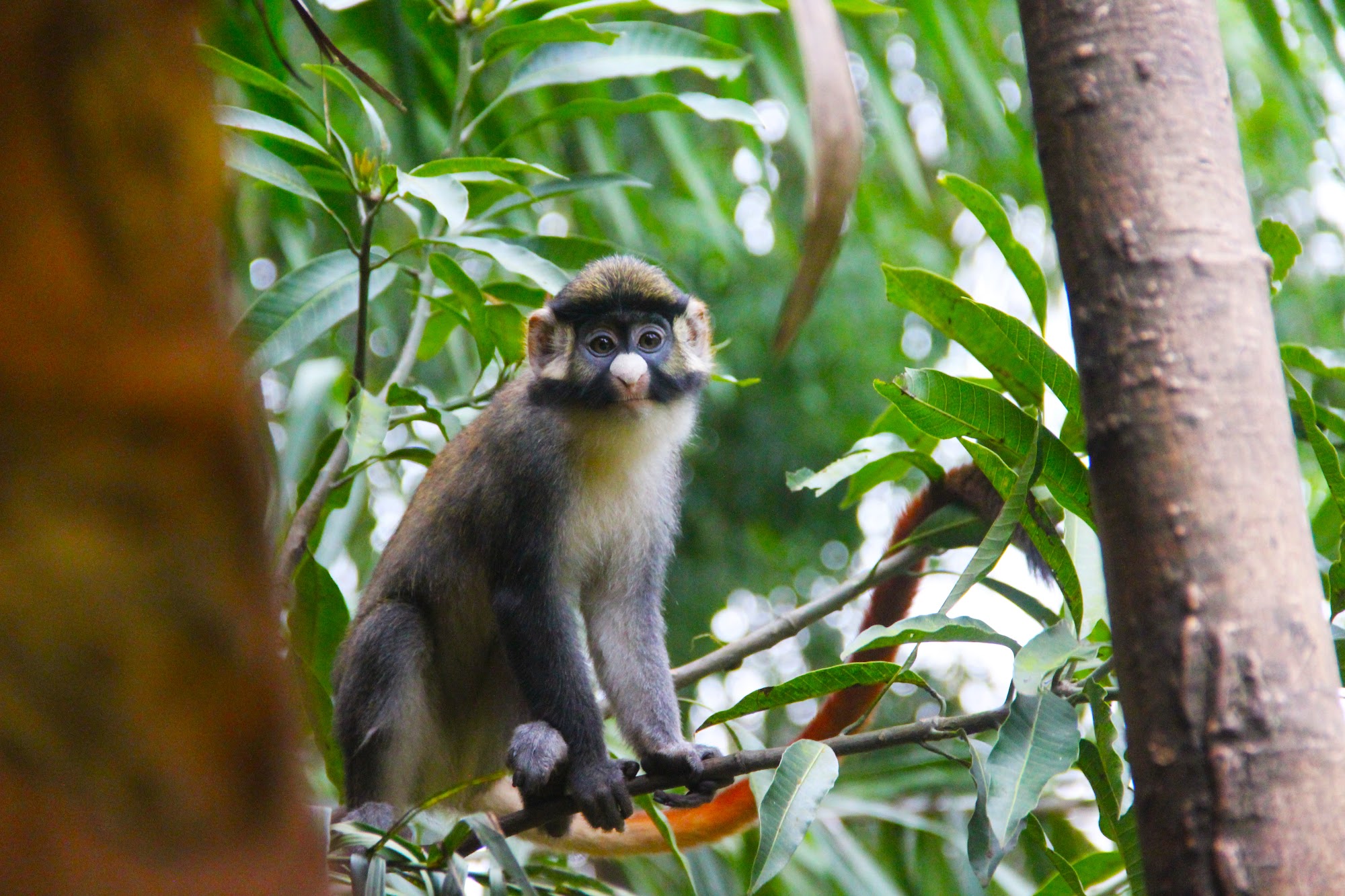
Reforestation of the valleys and plateaus in the Idiofa region
At the heart of the project: the planting and maintenance of native trees in the savanna areas of the Idiofa territory. The model is based on a carbon credit mechanism that ensures sustainable financing for the forests and provides compensation to the communities that manage them.
10,240 ha
already planted, out of a target of 16,000 ha by 2027
Pillar02—Economy
Bringing the Kimvuka Cooperative to Life
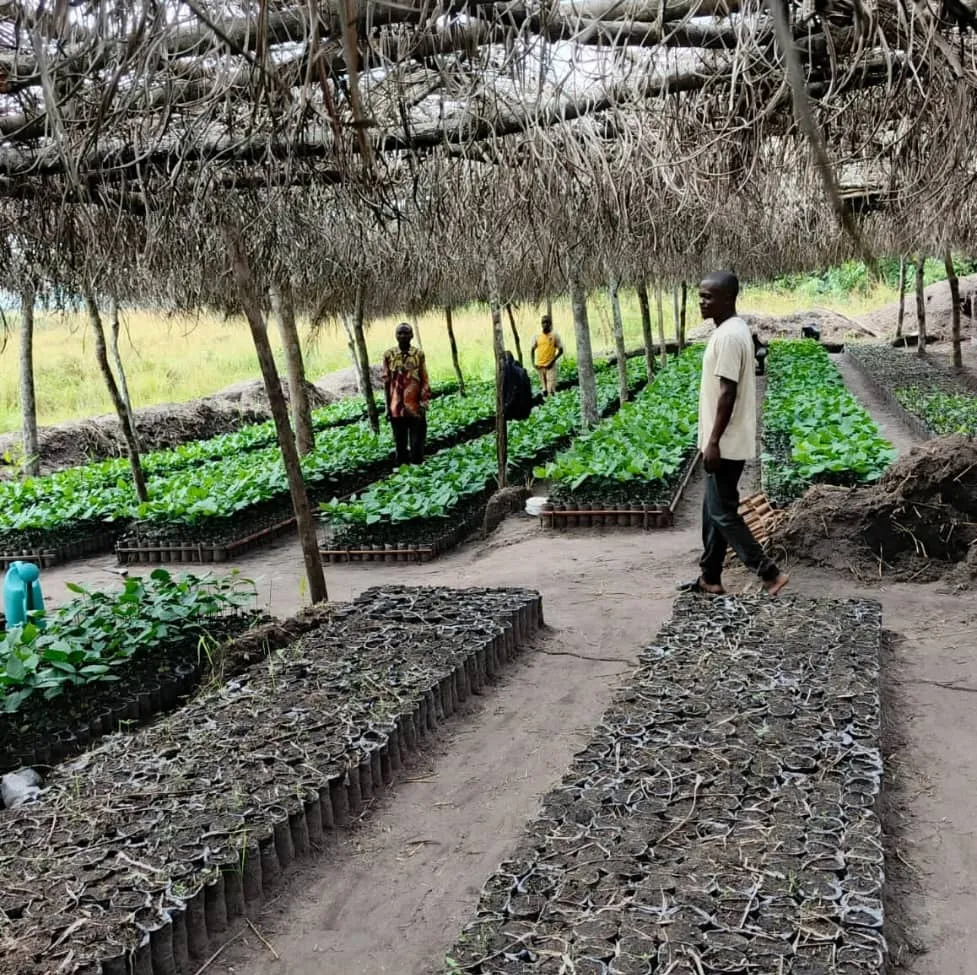
The Kimvuka Idiofa cooperative manages the food crops and agroforestry operations of the clans that have ceded their land. Downstream, the Kutoma ya Mbanza factory transforms local produce—wood, cassava, and palm—into a steady source of income, without the need for further deforestation.
1,720 ha
grown by the cooperative in Makanga and Bitshambele
390 ha
coffee and cocoa in agroforestry
Pillar03—Community
Map each village before planting a tree there
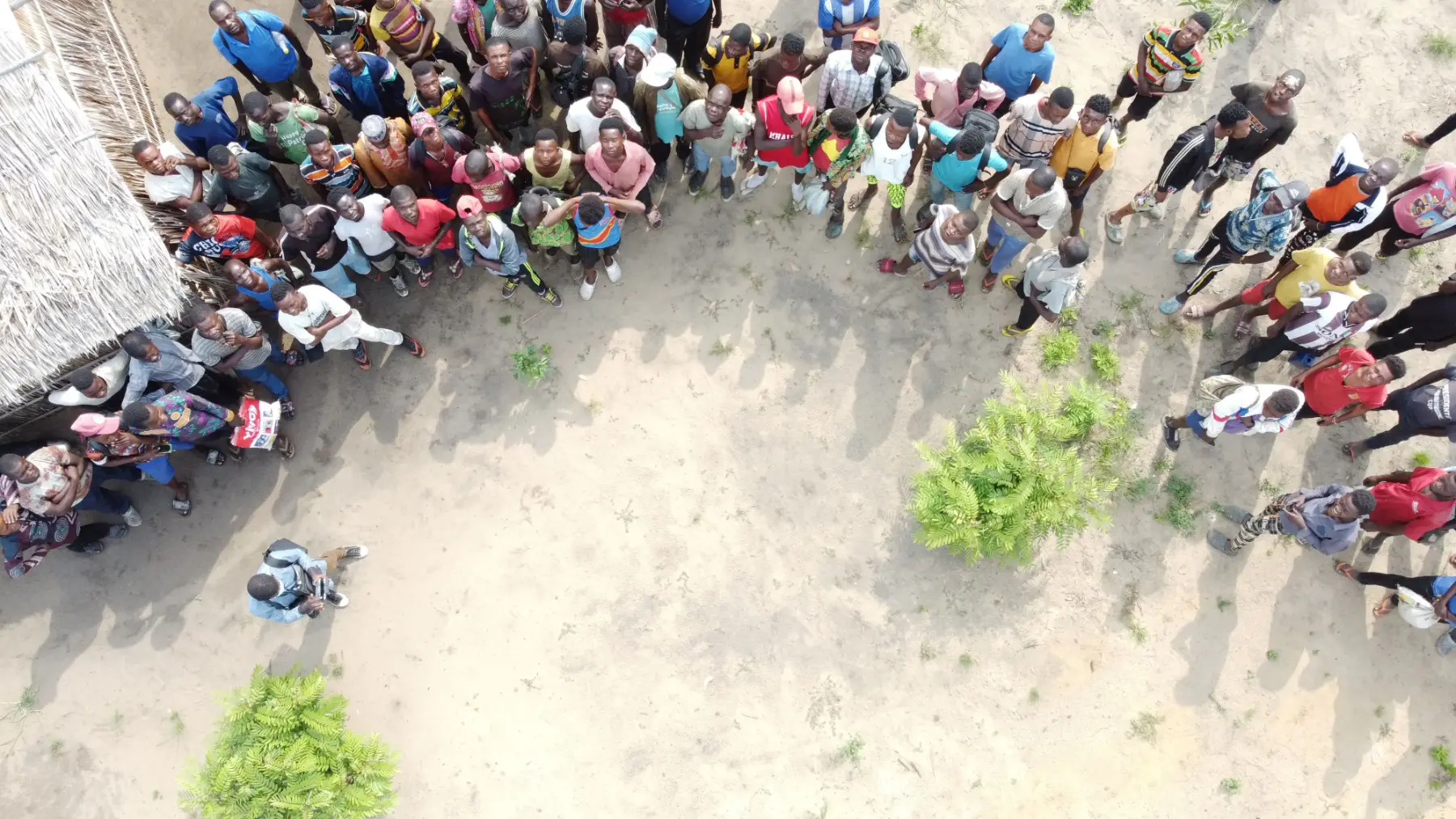
Before any planting takes place, a community meeting and a Local Development Committee (LDC) draw up a PSAT: a map that outlines where to plant, where to farm, and where to build. In addition to planting trees, Faja Lobi has also built a hospital, a workshop, and an internet café open to the entire village. In all its initiatives, Faja Lobi acts as a facilitator for the community.
13 sites, 28 villages
reforestation areas already mapped in collaboration with the communities
Pillar04—Education
Training the Next Generation
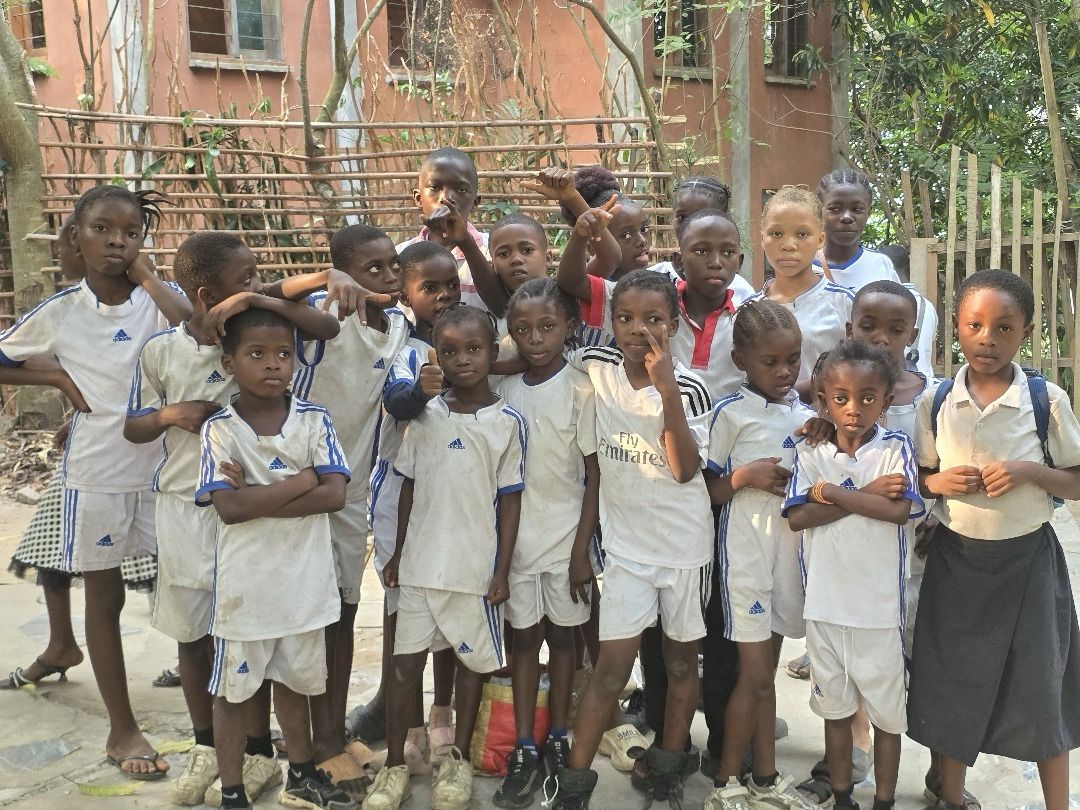
Faja Lobi is facilitating the establishment of the UNIKIK campus in Idiofa, which will house the new School of Forestry starting in 2026 in the heart of its Botanical Garden. The organization awards college scholarships to young people from local communities, runs an IT training center, and manages an educational botanical garden. The goal is to structure the project around sustainable Congolese expertise, rather than relying on a single individual.
36
current scholarship recipients; 47 graduates in total
475
Local species identified at the educational botanical garden
— And then
Each of these pillars is moving forward through specific projects, with budgets and progress closely monitored.
Explore the details of each project, or support one of the four pillars directly.